2022 Medicina
Chaihu Shugan powder, a traditional Chinese medicine, presents potential advantages in treating post-stroke depression, showing potential as an alternative to conventional antidepressants.
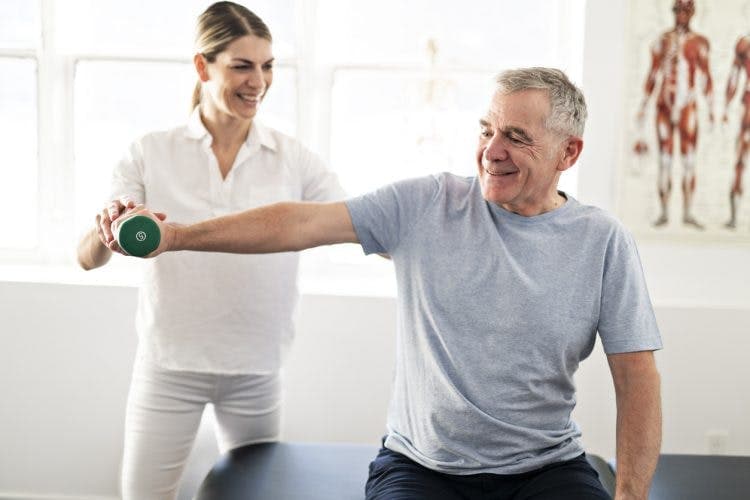
Acupuncture has been used in stroke recovery in Eastern countries from ancient times. There is now a convincing body of research on the beneficial effect of adjunct acupuncture treatment on aspects of poststroke recovery including dysphagia, poststroke pain syndrome and spasticity.
Furthermore, there is emerging evidence in the areas of motor recovery, insomnia, cognitive impairment and depression.
The following insights are obtained from systematic reviews and analysis of clinical trials investigating the efficacy of Chinese medicine and acupuncture for stroke rehabilitation.
2022 Medicina
Chaihu Shugan powder, a traditional Chinese medicine, presents potential advantages in treating post-stroke depression, showing potential as an alternative to conventional antidepressants.
2022 Current Neuropharmacology
Acupuncture could help manage different types of depression by increasing neuroplasticity, decreasing brain inflammation, and reducing side effects of conventional antidepressant treatment.
2022 Frontiers in Neurology
Acupuncture added to conventional rehabilitation has been found more effective in reducing post-stroke spasticity than conventional rehabilitation alone.
2022 Evidence-Based Complementary and Alternative Medicine
Meta-analysis has strong implications of the effectiveness of tongue acupuncture, especially when combined with conventional therapies, in treating poststroke aphasia. This holistic approach demonstrates significant improvements in patient outcomes.
2021 Evidence-Based Complementary and Alternative Medicine
Acupuncture, when combined with other treatments, is an effective therapy for treating swallowing difficulties experienced after a stroke.
2021 Acupuncture & Electro-Therapeutics Research
Compared with conventional treatment, acupuncture as an adjuvant therapy can significantly reduce the incidence of post-stroke fatigue.
2021 Evidence-Based Complementary and Alternative Medicine
Acupuncture combined with rehabilitation was more effective in improving the motor function and the ability of daily living.
2020 Acupuncture in Medicine
Acupuncture combined with antidepressants showed a more favourable effect on the treatment of post-stroke depression than antidepressants alone.
2020 Complementary Therapies in Clinical Practice
This review discovered that acupuncture might be a safe and effective adjuvant therapy for individuals with poststroke spastic hemiplegia.
2018 BMC Complementary Medicine and Therapies
Chai Hu Shu Gan San (a traditional Chinese Medicine) is a promising in treating depression, especially in post-stroke and postpartum cases.
2018 Clinical Rehabilitation
Current evidence suggests that traditional manual acupuncture integrated with rehabilitation therapy is more effective in alleviating pain, improving limb movement and activities of daily living.
2018 Acupuncture in Medicine
Acupuncture in combination with rehabilitation may have benefits for the treatment of acute and subacute stroke sequelae in comparison with rehabilitation alone.
2016 Evidence-Based Complementary and Alternative Medicine
Acupuncture, in combination with regular rehabilitation, may effectively alleviate poststroke shoulder pain more than rehabilitation alone.
2016 Scientific Reports
Acupuncture is a prospective therapy targeting neurogenesis for ischemic stroke.
2016 BMC Complementary Medicine and Therapies
Our results suggest that acupuncture could be effective for treating insomnia after stroke.
2016 Cochrane Database of Systematic Reviews
Acupuncture may have beneficial effects on improving dependency, global neurological deficiency, and some specific neurological impairments for people with stroke in the convalescent stage, with no obvious serious adverse events.
2012 The Journal of Alternative and Complementary Medicine
Acupuncture combined with exercise is effective for shoulder pain after stroke.
Although well-conducted clinical research can help members of the public to make better-informed decisions about their healthcare, we cannot claim that any particular treatment may be effective for any individual person.
When you consult with our Chinese medicine practitioners, you’ll receive personalised advice and treatment based on your symptoms and Chinese medicine diagnosis.
Browse our collection of scientific clinical research on acupuncture for stroke rehabilitation.
It includes recent and reputable papers published by peer-reviewed journals within the last 10 years.
2022, Dec 27
A Chinese Classical Prescription Chaihu Shugan Powder in Treatment of Post-Stroke Depression: An Overview
Medicina
CHSG shows promising clinical efficacy and mechanisms of action in treating PSD, providing a potential alternative to traditional antidepressant medications.
Gao Z, Wang Y, Yu H Full Article
2022, Apr
Potential Mechanisms and Clinical Effectiveness of Acupuncture in Depression
Current Neuropharmacology
In summary, substantial evidence from animal and human researches supported the beneficial effect of acupuncture in depression.
Yang NN, Lin LL, Li YJ, Li HP, Cao Y, Tan CX, Hao XW, Ma SM, Wang L, Liu CZ Full Article
2022, Aug 17
Effectiveness and safety of acupuncture for post-stroke spasticity: A systematic review and meta-analysis
Frontiers in Neurology
Acupuncture could be recommended as adjuvant therapy for spasticity after stroke. However, due to the high risk of bias and heterogeneity of the included studies, the effectiveness of acupuncture for post-stroke spasticity remains to be confirmed.
Xue C, Jiang C, Zhu Y, Liu X, Zhong D, Li Y, Zhang H, Tang W, She J, Xie C, Li J, Feng Y, Jin R Full Article
2022, Oct 03
Tongue Acupuncture for the Treatment of Poststroke Aphasia: A Systematic Review and Meta-Analysis
Evidence-Based Complementary and Alternative Medicine
For the SRs of acupuncture for depression, the selection of ROB assessment tools needs to be optimized. The reporting quality is poor, and the overall ROB of RCTs is high. Therefore, the results may not be reliable.
Yang S, Li L, Jiang R, Ding H, Xu F, Ge L, Kuang P, Wang Z Full Article
2021, Jan 19
The Effectiveness of Acupuncture for Dysphagia after Stroke: A Systematic Review and Meta-Analysis
Evidence-Based Complementary and Alternative Medicine
This systematic review indicated that acupuncture could be an effective therapy for treating dysphagia after stroke, although stricter evaluation standards and rigorously designed randomised controlled trials are needed.
Zhong, L., Wang, J., Li, F., Bao, X., Liu, H., & Wang, P. Full Article
2021, Dec 28
Acupuncture for the Adjunctive Therapy of Post-stoke Fatigue: A Systematic Review and Meta-analysis
Acupuncture & Electro-Therapeutics Research
Our systematic review and meta-analysis suggests that acupuncture combined with conventional rehabilitation therapy is an effective therapy for patients suffering from post-stroke fatigue, which is suitable for clinical promotion and use.
Chen Y, Peng M, Li Y Full Article
2021, Jan
Acupuncture plus Rehabilitation for Unilateral Neglect after Stroke: A Systematic Review and Meta-Analysis
Evidence-Based Complementary and Alternative Medicine
This academic article showed that acupuncture treatments when combined with rehabilitation have a positive effect on motor function, activity of daily life, neurological deficits, and spasticity. Patients are more aware of their limbs and improved symptoms of unilateral neglect.
Hou, Y., Liu, Y., Li, M., Ning, B., Wen, Z., & Fu, W. Full Article
2020, Dec 17
Does acupuncture combined with antidepressants have a better therapeutic effect on post-stroke depression? A systematic review and meta-analysis
Acupuncture in Medicine British Medical Acupuncture Society
Acupuncture combined with antidepressants showed a more favourable effect on the treatment of PSD than antidepressants alone. However, given the limited methodological quality, more high-quality RCTs conducted based on the Consolidated Standards of Reporting Trials (CONSORT) and Standards for Reporting Interventions in Clinical Trials of Acupuncture (STRICTA) guidelines are necessary.
Kun Zhang, Guangwei Cui, Yuan Gao, Weidong Shen Full Article
2020, Aug
Acupuncture therapy for poststroke spastic hemiplegia: A systematic review and meta-analysis of randomized controlled trials
Complementary Therapies in Clinical Practice
The study analysed 38 clinical trials with 2628 participants with high efficacy of acupuncture in recovery for post stroke spastic hemiplegia. Patients showed improvements of motor functioning, balance, sensation and joint functions. They also reported to have better performances to activities of life, after including acupuncture treatments with rehabilitation training.
Fan W, Kuang X, Hu J, Chen X, Yi W, Lu L, Xu N, Wang L. Full Article
2018, Feb 17
Treatment of depression with Chai Hu Shu Gan San: a systematic review and meta-analysis of 42 randomized controlled trials
BMC Complementary Medicine and Therapies
This review found that Chai Hu Shu Gan San has some advantages in treating depression, especially post-stroke depression and post-partum depression.
Sun Y, Xu X, Zhang J, Chen Y Full Article
2018, Apr
Traditional manual acupuncture combined with rehabilitation therapy for shoulder hand syndrome after stroke within the Chinese healthcare system: a systematic review and meta-analysis
Clinical Rehabilitation
This academic journal demonstrated that acupuncture is highly effective in alleviating pain when combined with rehabilitation therapy. Patients increased performance levels on stroke-specific assessments and improved on daily life activities.
Peng, L., Zhang, C., Zhou, L., Zuo, H. X., He, X. K., & Niu, Y. M. ( Full Article
2018, Dec 12
Effectiveness of Acupuncture Combined with Rehabilitation for Treatment of Acute Or Subacute Stroke: A Systematic Review
Acupuncture in Medicine British Medical Acupuncture Society
This clinical systematic review analysed 17 acupuncture trials which demonstrated the treatments to be highly effective. Stroke recovery is higher with acupuncture treatments compared with rehabilitation alone.
Vados, L., Ferreira, A., Zhao, S., Vercelino, R., & Wang, S. Full Article
2016, Jul 31
Acupuncture for Poststroke Shoulder Pain: A Systematic Review and Meta-Analysis
Evidence-Based Complementary and Alternative Medicine
This review shows positive results in the combined treatment of acupuncture and rehabilitation. However, further studies with more subjects and a rigorous study design are needed to confirm the role of acupuncture in treating poststroke shoulder pain.
Lee, S.-H., & Lim, S. M. Full Article
2016, Jan 20
Acupuncture for neurogenesis in experimental ischemic stroke: a systematic review and meta-analysis
Scientific Reports
This systematic review found that acupuncture improved neurological deficits and reduced brain edema in experimental ischemia. Patients under the acupuncture group have enhanced Neurological function score with increased endogenous neurogenesis.
Lu, L., Zhang, Xg., Zhong, L. et al. Full Article
2016, Jul 19
Acupuncture for insomnia after stroke: a systematic review and meta-analysis
BMC Complementary Medicine and Therapies
This clinical article showed high efficacy of acupuncture in treating insomnia post-stroke. Patients mainly experienced hyperactivities of sympathetic nervous system which resulted in disturb sleep patterns. Acupuncture reduced other post-stroke insomnia symptoms such as anxiety, depression and side effects from antipsychotic drugs. It was effective improving overall quality of sleep and lifestyle.
Lee SH, Lim SM Full Article
2016, Aug 26
Acupuncture for stroke rehabilitation
Cochrane Database of Systematic Reviews Cochrane
This research article showcased that acupuncture treatments have beneficial effects on improving dependency, motor and cognitive functions , with no obvious serious adverse events. The clinical trials also evaluated improvements on reduction of pain and spasticity and increased sleep quality and mental health.
Yang A, Wu HM, Tang JL, Xu L, Yang M, Liu GJ. Full Article
2012, Sept
Acupuncture for Shoulder Pain After Stroke: A Systematic Review
The Journal of Alternative and Complementary Medicine Society for Acupuncture Research
This systematic review proved that acupuncture combined with exercise is effective for shoulder pain after stroke. Patients showed improvements with axillary nerve pain, spasticity of shoulder muscles and mobility of rotator cuff muscles.
Jung Ah Lee, Si-Woon Park, Pil Woo Hwang, Sung Min Lim, Sejeong Kook, Kyung In Choi, and Kyoung Sook Kang. Full Article
It is by virtue of the twelve channels that human life exists, that disease arises, that human beings can be treated and illness cured. The twelve channels are where beginners start and masters end.